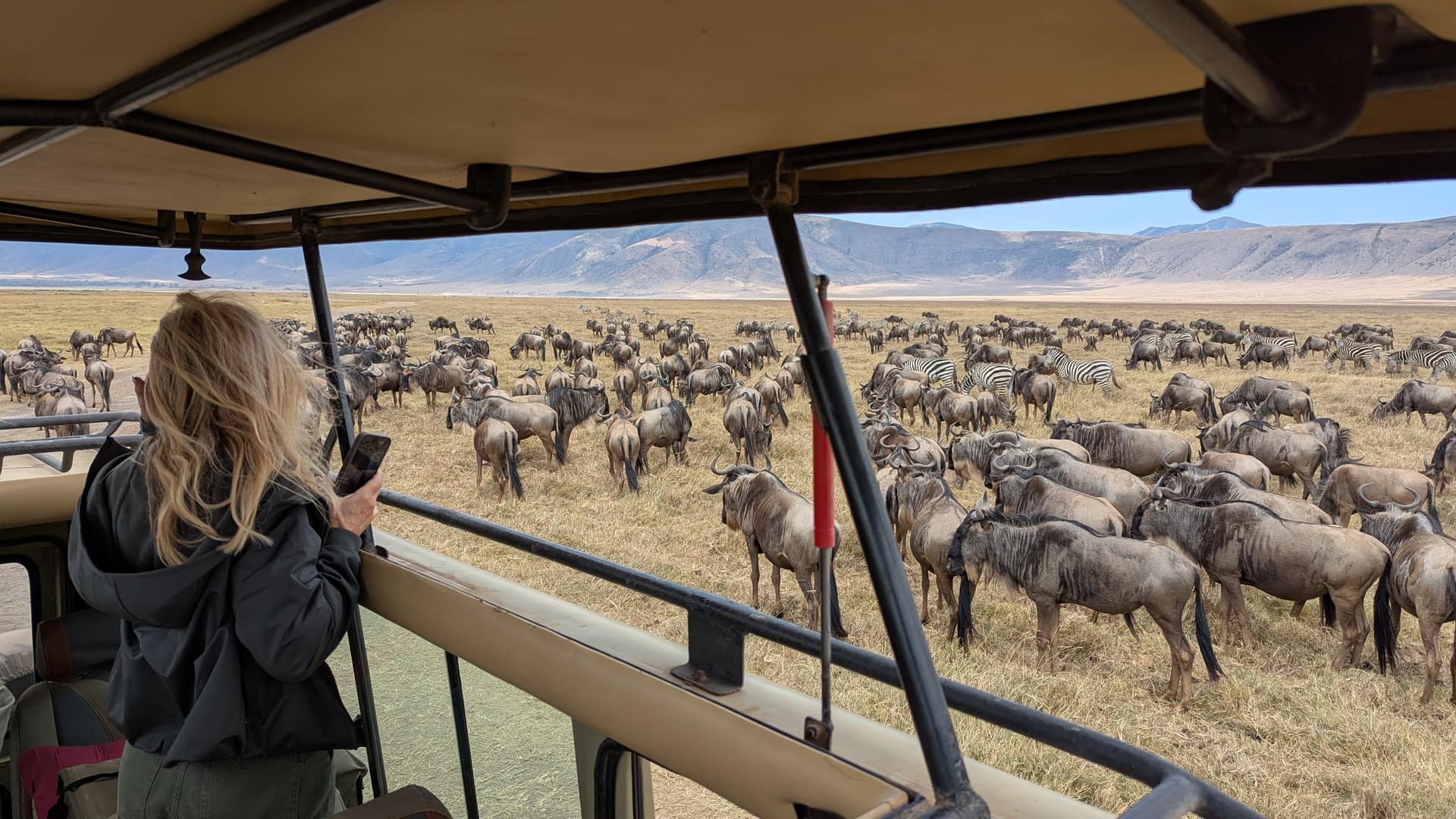
The first thing to understand about the Great Migration is that it never starts and never ends. Two million wildebeest, zebra, and gazelle move in a slow, year-round circle through the Serengeti ecosystem, following the rain. So the question is never "will the migration be happening?" — it always is. The question is what part of the spectacle you want to see.
January to March: calving season
The herds gather on the short-grass plains of the southern Serengeti and the Ndutu area. In a roughly three-week window — usually February — around half a million calves are born. The grass is green, the light is beautiful, and the predator action is the most intense of the year.
This is our favourite season to recommend to photographers and to anyone who wants drama without the river-crossing crowds.
June to September: the river crossings
By mid-year the herds push north and west, and from roughly July to September they face the Mara River. The crossings are chaotic, dusty, crocodile-haunted — the footage you have seen in every documentary. They are also unpredictable: a herd can mass on the bank for two days, then cross in eight minutes.
A crossing is not an appointment. It is a reward for patience — and for a guide who reads the herds instead of the clock.
If a crossing is your dream, plan at least three nights in the northern Serengeti. One-night visits gamble; three nights stack the odds heavily in your favour.
April, May, and November: the honest truth
The long rains (April–May) and short rains (November) are the Serengeti’s quiet seasons. Some camps close, some roads slow down — and rates drop significantly. But the plains turn emerald, the skies go cinematic, and you can drive an hour without seeing another vehicle. For returning safari-goers, the green season is a secret worth keeping.
So when should you come?
- For predator drama and newborn calves: February
- For river crossings: late July to early September, with 3+ nights in the north
- For classic dry-season game viewing everywhere: June to October
- For solitude and soft light at lower rates: April–May or November
Whenever you travel, the real difference is positioning — being in the right corner of a 30,000 km² ecosystem in the right week. That is precisely what a locally based, Tanzanian-owned operator does for you. Tell us your dates and we will tell you, honestly, what the herds will be doing.